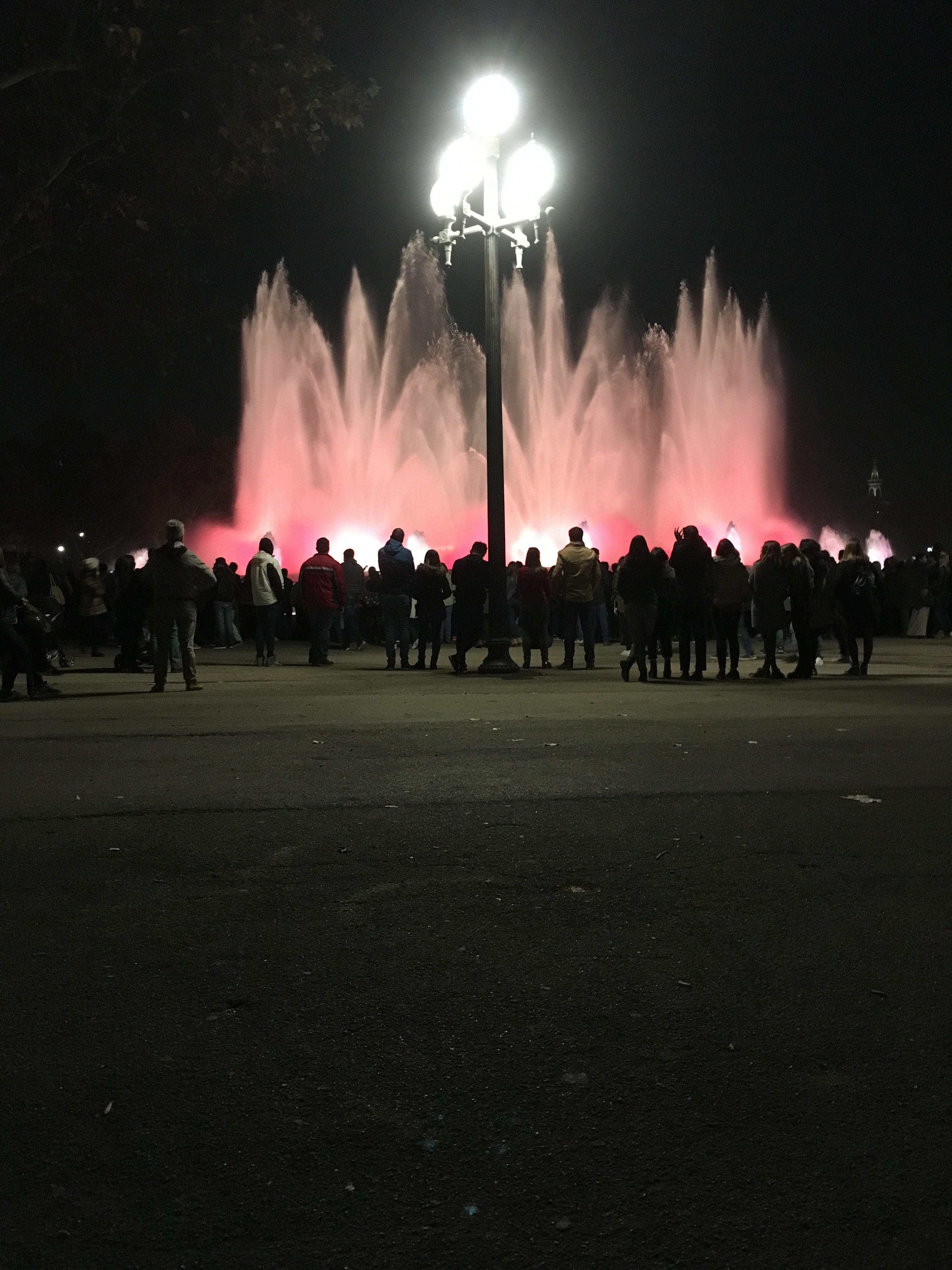
One of the most visited attractions in Barcelona is the so called ‘Magic Fountain de Montjuic’. It is a music show where the water of the fountains changes shape and color. We are not very fans and there are always many people, but hey, once in a lifetime he can be fine;)
To get there you have to go by metro to Espanya station (L1 or L3) and look for Maria Cristina Avenue. This whole avenue is where the Universal Exposition of 1929 was developed. The most famous pavilion is the German that designed Mies van der Rohe, and throughout the world it is known as the Barcelona Pavilion. It is very close to the fountain and it is spectacular. Probably our favorite building in the city.
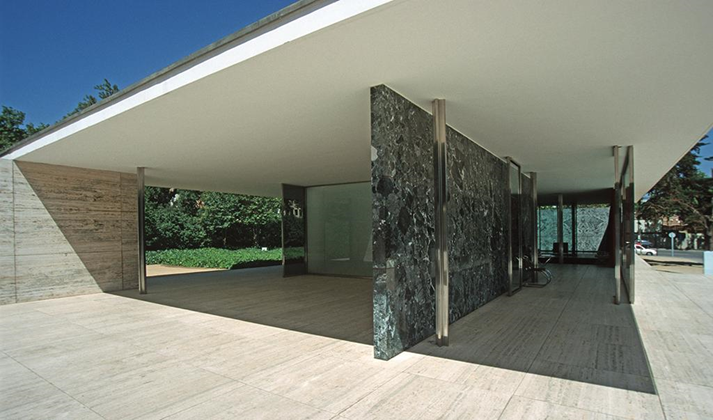
And the funny thing is that being such an important work, there are never many tourists. Keep in mind that it is a reconstruction of 1986, since the original was destroyed after the exhibition.
Once here you have a couple of options nearby that may be worth while waiting for the fountain show. The first is to visit the Teatre Grec, which is a 15-minute walk away. With the mobile you will be easy to reach. The theater imitates a Greek form but was also built in 1929 for the universal exhibition. Around it there are very nice gardens to walk in the late afternoon.
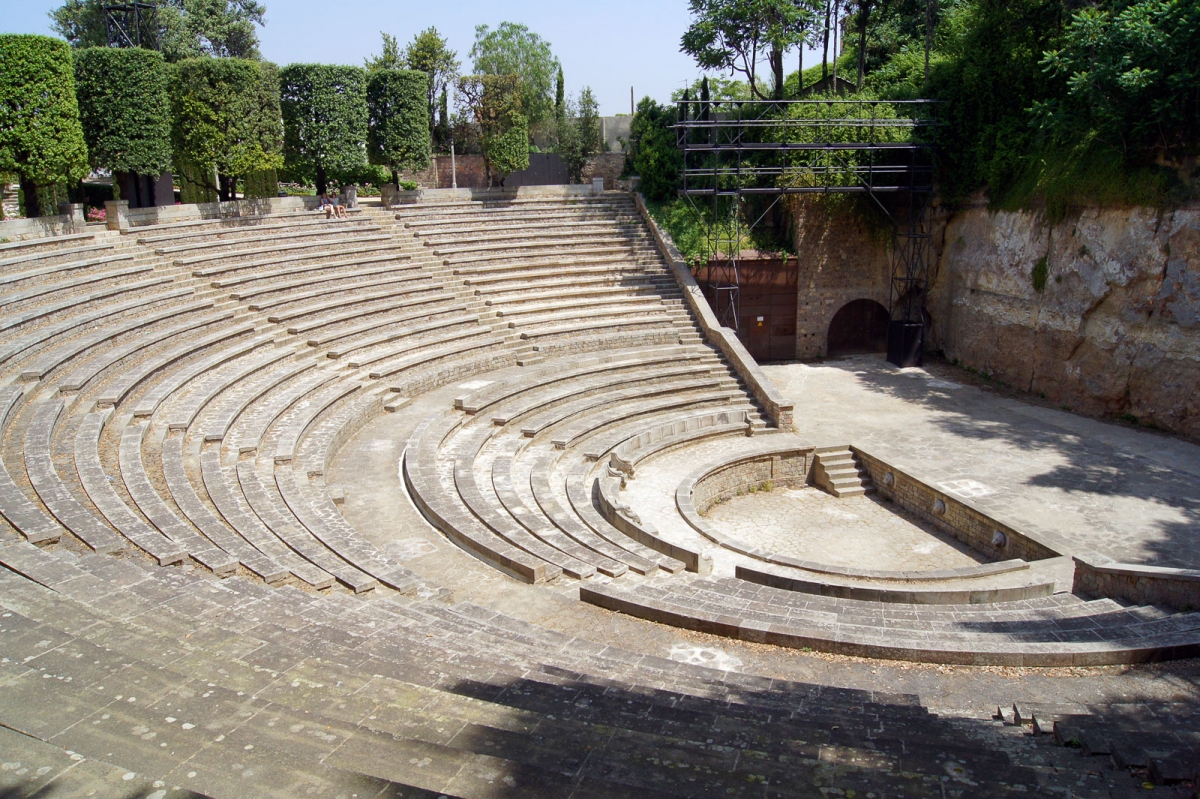
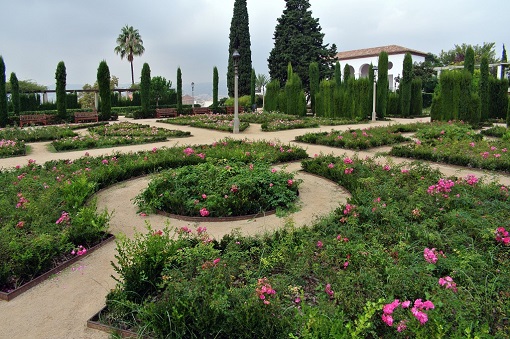
Throughout the summer in Barcelona the so-called Festival Grec is celebrated, with hundreds of music, theater and dance shows. Many of them are made at night in the Teatre Grec, the truth is that it is pretty cool. You have more information here.
The second option is to go up the escalator to the so called Olympic ring where the 1992 games were played. You have the athletics stadium, the covered pavilion and the Bernat Picornell swimming pools (where you can certainly enter and bathe).
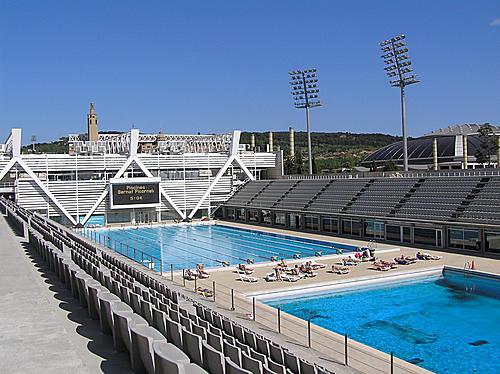
Barcelona had in 100 years three major events that completely changed it: the universal exhibition of 1888 helped to build the whole area of the ‘Parque de la Ciutadella‘ and the port, the 1929 exhibition this whole area of Montjuic, and the 1992 Olympic Games allowed to fix all the beaches. The events were used as “excuses” to improve the city.