La Rambla is probably the most famous street in Barcelona. It goes from Plaça Catalunya to the sea, separating the neighborhoods of El Gòtic and El Raval. For many years now, the locals abandoned this walk that was once the heart of the city and that is now full of horrible bars and shops. It was the target of the terrible attack of Aug 17, 2017.
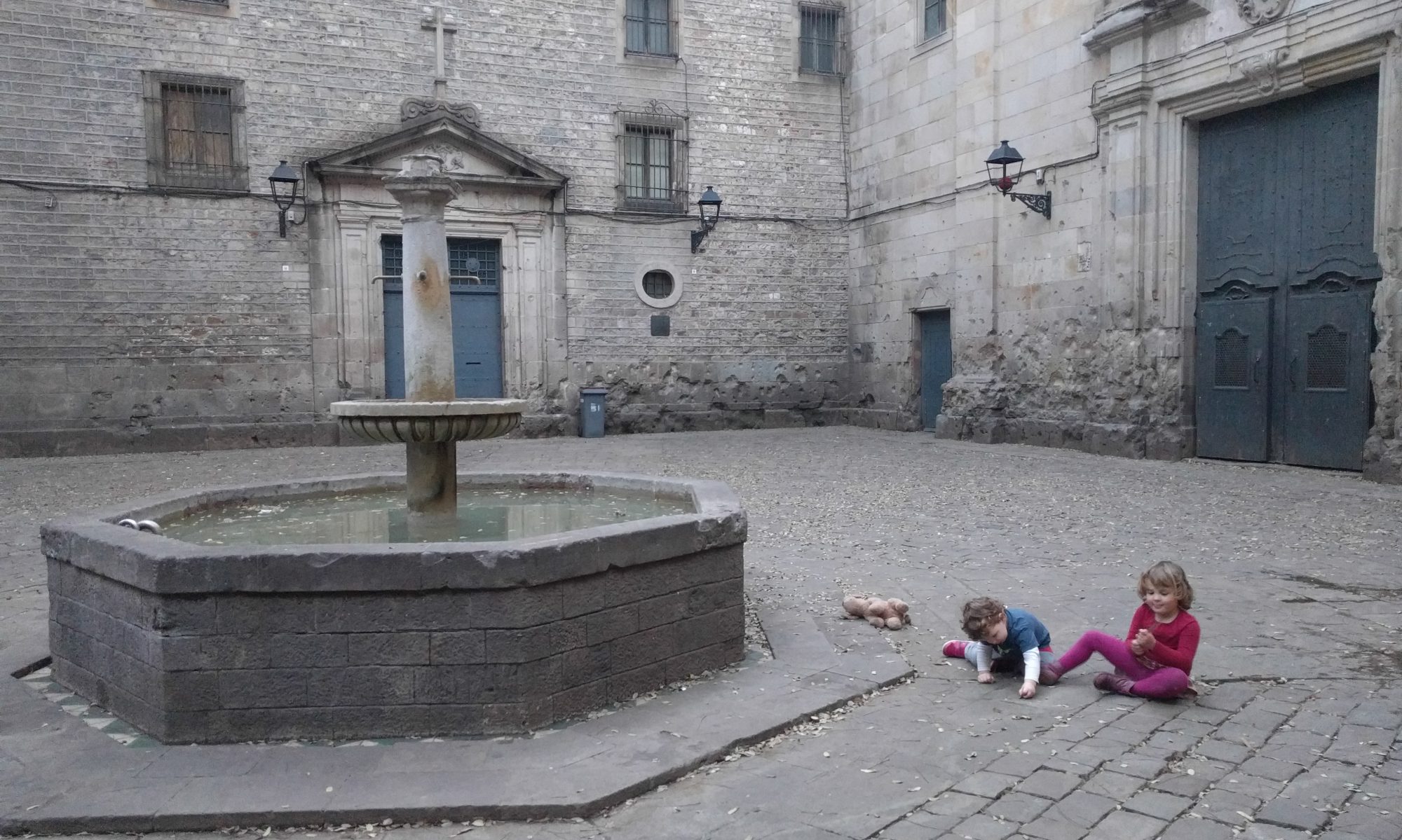
children playing in the square
If we were to choose a single site in Barcelona, this would surely be Plaça Sant Felip Neri. Maybe it’s because our children’s school is here, but the plaza has a special charm.
giants in the church
The Església del Pi is one of the few buildings that have not been modified since the middle ages, unlike what happens with the Cathedral. You have to go first thing in the morning, when there will be fewer people in the square and the light is more spectacular. It is a very nice place if you go in the right moment.
all that glitters is not gold
The gothic quarter is one of the main tourist attractions of Barcelona. Problem is it’s barely gothic.
cheese and wine in the best setting
In the neighborhood of La Ribera there are two main tourist attractions. The first is the Church of Santa Maria del Mar, which is one of the 3 big churches in the old city along with the cathedral and Santa Maria del Pi. If you have to choose a single monument of Barcelona, choose this one. There are many people, but it’s worth it. On the internet you can read about its history, it’s quite interesting.
the neolithic avenue
Via Laietana is the street that separates the neighborhoods of El Gòtic and La Ribera (or El Born). Its name comes from the Neolithic tribe of the Laietans, who were the first known inhabitants of the area where Barcelona is now.
the zoo in the citadel
The Barcelona zoo is inside the Ciutadella Park (literally the citadel park). So you have a 15 minute walk from home so surely you will have to go. The zoo is pretty standard but the kids will enjoy it.
sushi in the playground (and a coffee from the 14th century)
In Barcelona it is very common what is called “hacer el vermut”, which consists of sitting on a terrace about 12 or 1 (here you eat later, between 2 and 3) and have a beer with a small “tapa”(a small portion of food).
Continue reading “sushi in the playground (and a coffee from the 14th century)”
the center of power
Plaça Sant Jaume is the center of power of the city. You will see that there are two large buildings: the city hall on the side closest to home, and the regional government headquarters on the other side. One way to distinguish them is by the flags, since the City Hall has the one of Barcelona.
where it all began
Barcelona was founded by the Romans in 15 BC as a small military colony. The wall of the Roman city went through what currently would be the streets Avinyó (ours!), Avinguda Catedral and Via Laietana. Until the 10th century, Barcelona was just that small piece of what is now the Gothic Quarter.