Barcelona was founded by the Romans in 15 BC as a small military colony. The wall of the Roman city went through what currently would be the streets Avinyó (ours!), Avinguda Catedral and Via Laietana. Until the 10th century, Barcelona was just that small piece of what is now the Gothic Quarter.
Being a small colony there was no great building like circuses or theaters. The capital was Tarragona, which is 1 hour by train and where you can see large Roman buildings. If you like the theme it’s worth it, the train leaves from the Estació de França.
What can still be seen are pieces of the Roman wall, especially in the streets Sots-Tinent Navarro and Tapineria, next to Via Laietana. In the Avinguda Catedral you can also see a piece of wall, along with a sculpture with the Roman name of Barcelona: Barcino. Children like to climb it.
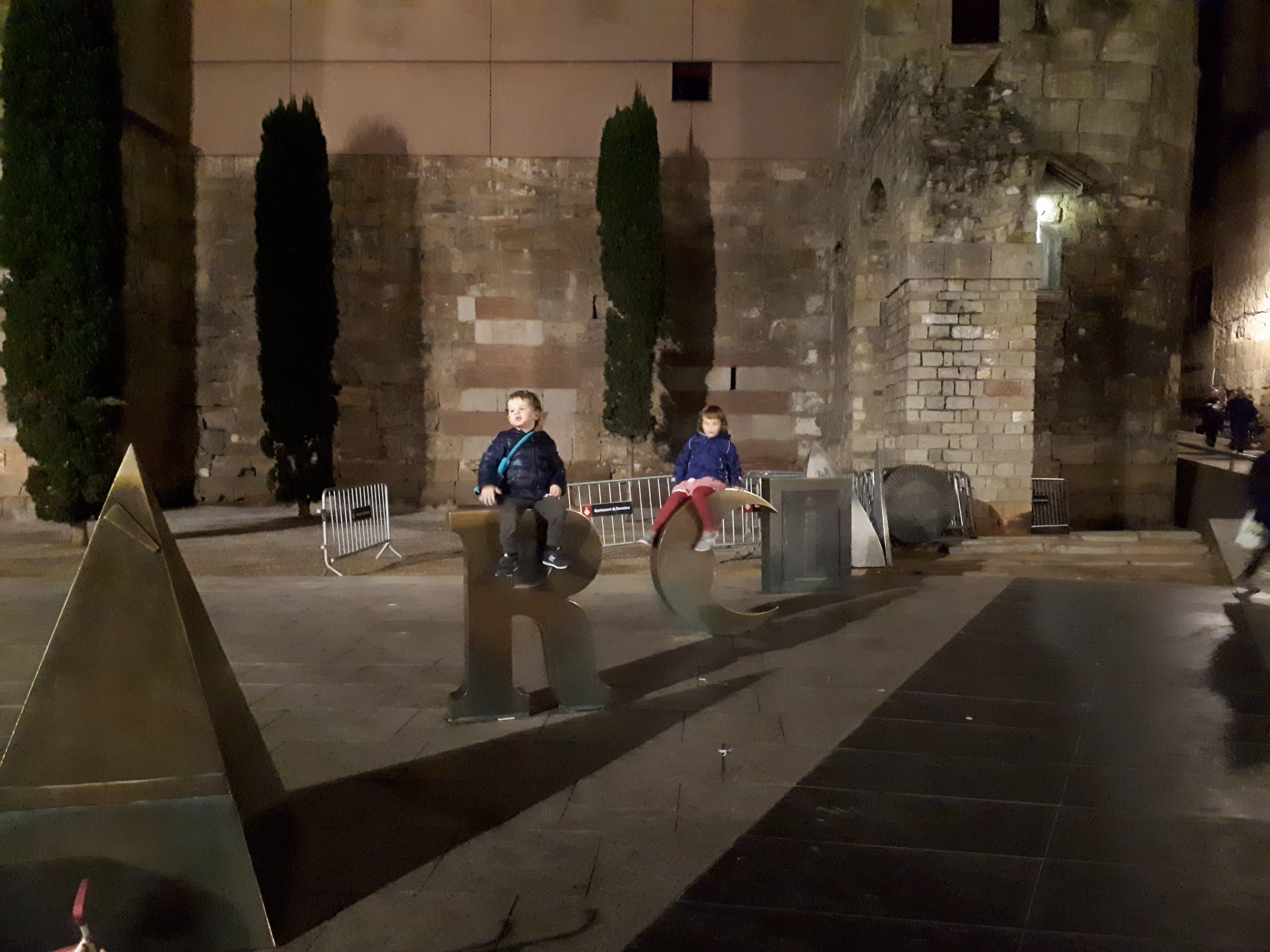
Beware that here you will also see an aqueduct arch that was installed in the 20th century only for tourists to come. It is totally new. In fact, the Avinguda Catedral itself dates from the 20th century, before there were small streets like in the rest of the neighborhood. If you want to see the original aqueduct, go to the playground of the Plaça Vuit de Març (it is 2 minutes walk) and look at the back wall 🙂 This is the reality of the cities, the old buildings were used to build others on top.

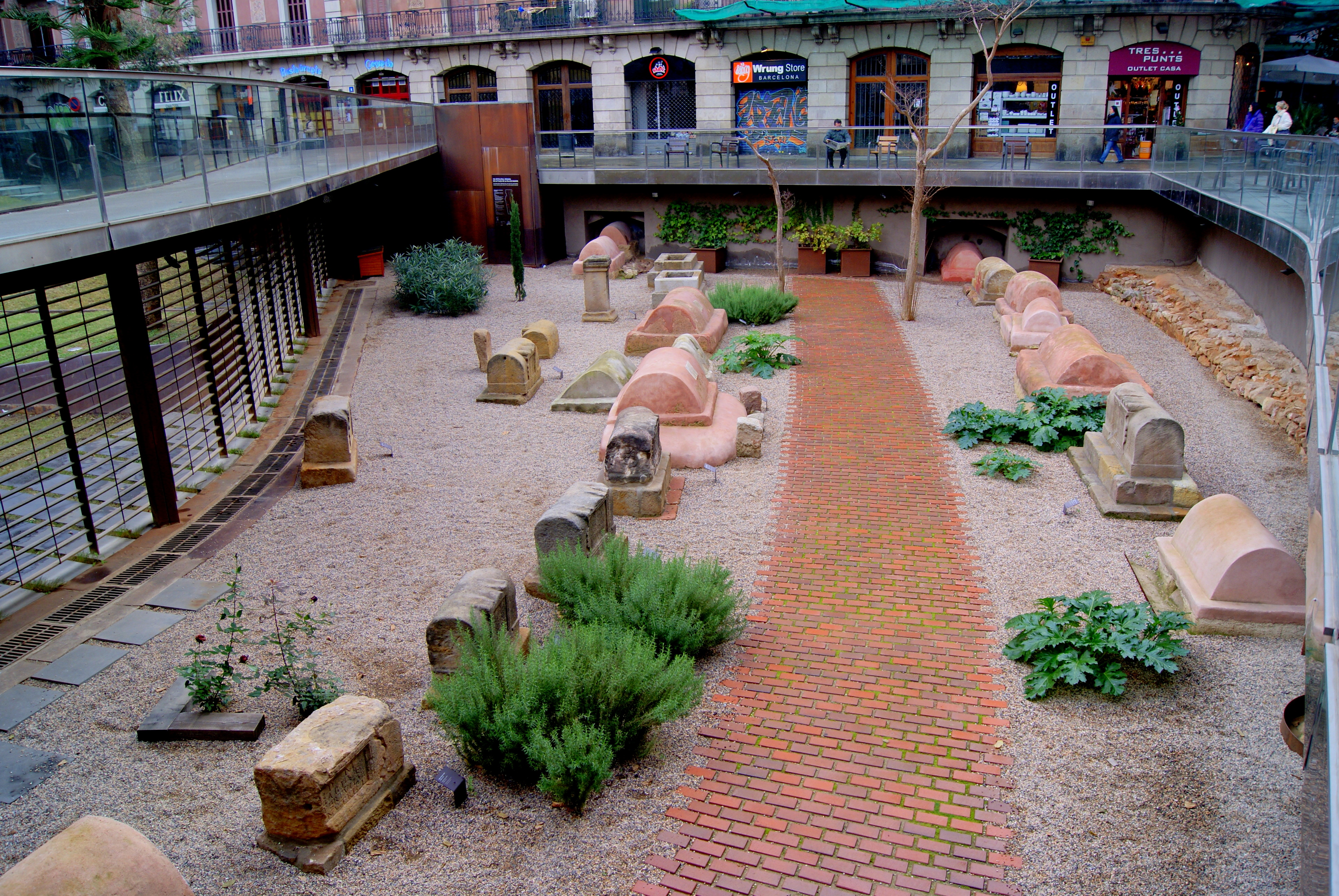
But our favorite Roman construction is the Via Sepulcral de la Plaça Madrid, which is 5 minutes away on foot. You will see tombs very well preserved following what was a road that left the Roman city.
In the center of the city was the Temple of Augustus. As we explain in this other post, you can visit his remains in the Carrer Paradís 10. In fact, the current Barcelona is built on top of the Roman city. You can visit for example the Museu de Historia de Barcelona in the Plaça del Rei, or a building called Pati Llimona next to the house (Regomir 3). But in reality anywhere that is excavated in the old city Roman remains appear below.